


How does selectivity work in electrical panels?

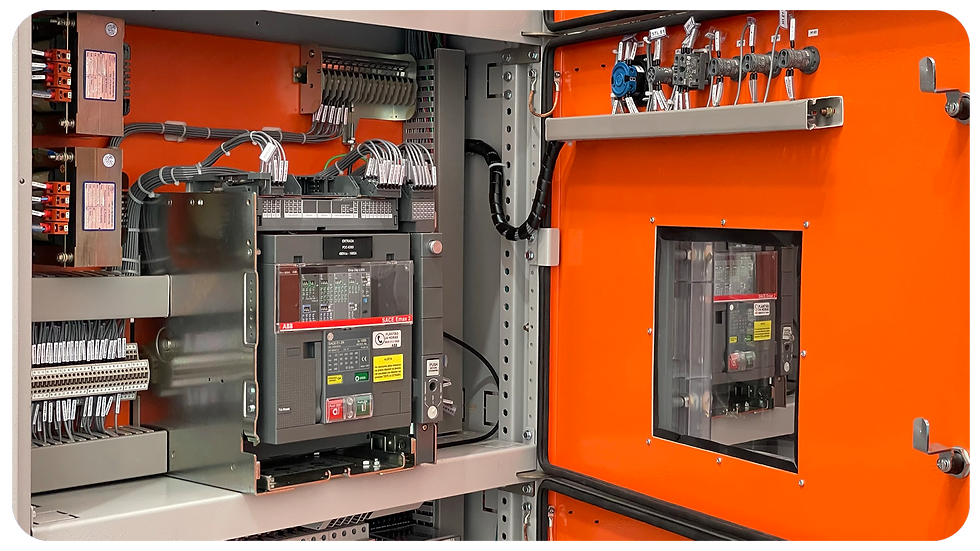
Imagine a situation that every engineer has likely experienced: an electrical failure in a specific area of the industrial plant results in a complete shutdown of operations. Hours of production are lost, sensitive equipment is damaged, and losses that could have been avoided with proper electrical protection planning are incurred.
We have observed that selectivity is often underestimated during the design phase, but it represents one of the fundamental pillars for the operational continuity of any industrial facility.
What does selectivity really mean in practice?
Electrical selectivity, technically known as protection coordination, goes beyond simply adjusting circuit breakers. It is a systemic strategy that determines which protection device should act first in case of a fault, isolating only the affected section and keeping the rest of the installation operational.
The technical fundamentals behind the coordination.
Effective selectivity depends on a careful analysis of multiple electrical parameters. The study considers the available short-circuit current at each point in the installation – a value that can vary significantly depending on the system impedance and the power of the feeder transformer.
Another determining factor is the characteristic curves of the protection devices. Each circuit breaker has specific thermal and magnetic curves that define its behavior during overloads and short circuits. The proper coordination of these curves ensures that the device closest to the fault acts first, respecting time intervals that allow this discrimination.
For medium voltage systems, such as the Medium Voltage Cubicles we have developed up to 36kV, the analysis becomes even more complex due to the high fault currents and the need for protection against electric arcs – a phenomenon that can generate temperatures exceeding 20,000°C.
Selectivity strategies for different applications
Chronometric selectivity:
Widely used in low-voltage switchgear, this strategy is based on differentiating tripping times. The circuit breaker closest to the load has a shorter tripping time, while upstream devices wait progressively longer before tripping.
In our main distribution boards (QGBT), for example, we apply this technique by configuring output circuit breakers with instantaneous time delay, the panel input circuit breaker with a 100ms delay, and the main feeder with a 300ms delay. This time cascade ensures proper coordination.
Energy selectivity: precision in high currents
For heavy industrial applications, we use the concept of specific throughput. This method considers not only the fault current, but the total energy that the device allows to pass until its complete operation. It is particularly effective in systems with very high short-circuit currents, common in installations with large transformers.
Logical selectivity: technological evolution
In more complex projects, especially substations and power plants, we use digital relays with intercommunication capabilities. This technology allows the relay to detect a fault and instantly communicate it to other devices, preventing unnecessary operation. The result is virtually perfect coordination, with significantly reduced fault clearing times.
Regulatory compliance: more than an obligation, it's safety.
The NBR IEC 61439-1 standard, which regulates low-voltage switchgear and controlgear assemblies in Brazil, establishes specific requirements for protection coordination. Our experience in developing panels that comply with this standard allows us to affirm that adequate selectivity is not only a technical requirement, but a fundamental competitive advantage.
For medium-voltage systems, we strictly adhere to NBR IEC 62271-200, which defines parameters for coordination in substations. This compliance is essential not only for approval by the relevant authorities, but also to guarantee safe and reliable operation for decades.
Modern challenges and integrated solutions
With the increasing digitalization of industrial facilities and Industry 4.0, we face new challenges in protection coordination. Sensitive electronic loads, automatic backup systems, and distributed microgeneration create more complex fault scenarios, requiring increasingly sophisticated selectivity studies.
Our PowerFlex line was developed precisely to meet these modern demands, incorporating technologies that allow for precise coordination adjustments and real-time monitoring of protection performance.
The BTM experience
Three decades developing customized solutions have taught us that each facility has unique characteristics that directly influence the selectivity strategy. There is no universal recipe, but rather a need for careful case-by-case analysis.
We work side-by-side with engineering teams, conducting detailed studies that consider not only the technical aspects but also the operational peculiarities of each client. This collaborative approach has resulted in electrical systems that operate reliably.
Proper selectivity transforms the complexity of electrical protection into operational reliability. For projects demanding maximum continuity and safety, rely on BTM's expertise in developing electrical panels with optimized protection coordination tailored to your specific needs.
Would you like to discuss how selectivity can optimize the reliability of your electrical system? Our technical team is ready to develop the ideal solution for your project.


Comments